What is Bradley Wiggins' net worth?
Bradley Wiggins is a British professional road and track racing cyclist who has a net worth of $100 thousand. A rare athlete who mastered both track and road cycling at the highest levels, Bradley Wiggins became a national icon through his dominance in Olympic competition and his historic victory at the Tour de France. Over the course of his career, he won five Olympic gold medals, multiple world championships, and in 2012 became the first British rider to win the Tour de France, a feat that fundamentally altered cycling's profile in the United Kingdom. Known for his metronomic time-trialling ability, tactical intelligence, and intense dedication to preparation, Wiggins combined scientific training with old-school endurance. His success peaked during the London 2012 Olympics, where he claimed gold in the individual time trial just days after winning the Tour, cementing his place as one of Britain's most accomplished athletes. In retirement, his life took a far more turbulent turn, marked by addiction struggles, mental health challenges, and financial collapse, followed by a public and ongoing effort toward recovery and reinvention.
Early Life
Bradley Wiggins was born on April 28, 1980, in Ghent, Belgium, and raised primarily in London. His father, Gary Wiggins, was an Australian professional cyclist, and Bradley was exposed to the sport from a young age. After his parents separated, Wiggins grew up with his mother in Britain, where cycling became both an escape and a discipline. He attended Herne Hill Velodrome in south London, a storied breeding ground for British cycling talent, and quickly demonstrated an aptitude for endurance track events. As a teenager, he committed fully to the sport, joining British Cycling's performance pathway and sacrificing much of a conventional adolescence in pursuit of elite competition.
Track Cycling Dominance
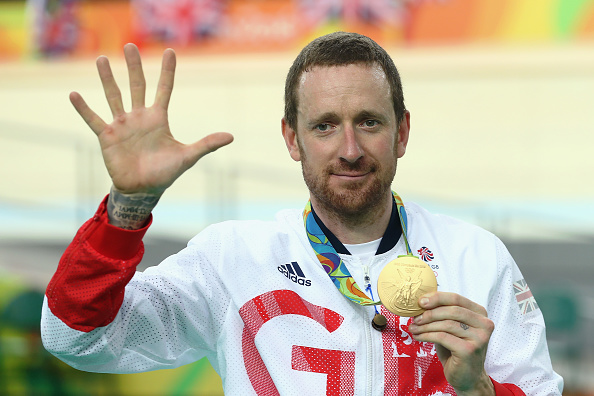
Wiggins first achieved international prominence on the track. He competed in four consecutive Olympic Games, beginning in Sydney in 2000, and steadily built a reputation as one of the world's premier pursuit riders. His Olympic gold medals came in the team pursuit at Athens 2004, Beijing 2008, and London 2012, as well as the individual pursuit at Beijing and the individual time trial at London. He also won multiple world championship titles and played a central role in Britain's transformation into a global track cycling powerhouse. Wiggins' success was built on precision pacing, aerodynamic efficiency, and an obsessive attention to marginal gains, traits that later translated seamlessly to road racing.
Transition to Road Racing
While many elite track cyclists struggle to adapt to the demands of Grand Tour racing, Wiggins made the transition with remarkable effectiveness. He joined professional road teams and gradually developed into one of the strongest time trialists in the peloton. His breakthrough came with strong overall performances in stage races, culminating in his leadership role at Team Sky. Designed around a data-driven, highly controlled racing philosophy, the team was built to support Wiggins' strengths, particularly in time trials and steady mountain pacing.
Julian Finney/Getty Images
Tour de France Victory
In 2012, Wiggins achieved the defining triumph of his career by winning the Tour de France. He controlled the race with discipline and consistency, supported by a formidable team that included Chris Froome. His victory marked a historic milestone as the first British rider to claim cycling's most prestigious prize. Just days later, he added Olympic gold in the individual time trial at the London Games, completing one of the most celebrated double achievements in cycling history. That same year, he was knighted for services to cycling and named BBC Sports Personality of the Year.
Later Career and Retirement
Following his 2012 peak, Wiggins continued to compete at a high level but gradually shifted focus back toward track cycling. He returned to the Olympics in 2016, winning gold in the team pursuit at Rio, before retiring later that year. His retirement marked the end of an era in British cycling, closing the chapter on one of the sport's most meticulously planned and executed careers.
Post-Retirement Struggles
Life after professional sport proved deeply challenging for Wiggins. He later spoke openly about suffering from addiction, describing himself as a "functioning addict" during the years following retirement. He admitted to heavy cocaine use, severe emotional distress, and destructive behavior, including episodes that unfolded in front of his children. Wiggins also acknowledged financial collapse after retirement, compounding his mental health struggles and contributing to a prolonged personal crisis. In interviews, he described the emotional emptiness he felt after the accolades faded and the structure of elite competition disappeared.
Recovery and Life After Cycling
In the mid-2020s, Wiggins began publicly addressing his recovery process. With support from friends and former competitors, including Lance Armstrong, he sought professional treatment in the United States at a trauma-focused rehabilitation clinic. He has spoken candidly about confronting unresolved trauma, addiction, and the psychological cost of elite sport. Alongside recovery, Wiggins has remained connected to cycling through media work, writing, and mentorship, including involvement in podcasts and commentary. His son Ben has since become a professional cyclist and world champion on the track, extending the family's connection to the sport.
Bradley Wiggins' legacy is defined not only by unprecedented athletic achievement but also by his willingness to speak openly about the darker realities that followed success. His story stands as both a blueprint for sporting excellence and a cautionary tale about the personal cost of life at the very top.
Read more: Bradley Wiggins Net Worth
Comments
Post a Comment