What was Raul Malo's net worth?
Raul Malo was an American singer, songwriter, musician, and record producer who had a net worth of $10 million. Raul Malo was widely regarded as one of the most gifted vocalists in modern American music, a singer whose lush, vibrato-rich baritone and genre-bending instincts helped redefine what a country-rooted band could sound like. As the frontman, principal songwriter, and creative engine of the Mavericks, Malo fused country, rock, pop, Latin rhythms, and orchestral flourishes into a style that felt both timeless and strangely unclassifiable. Across more than three decades, he became known for his operatic power, emotional nuance, and magnetic stage presence, earning a reputation as "El Maestro" among fans and musicians alike. Under his leadership, the Mavericks pushed far beyond the confines of Nashville's commercial lanes, winning Grammy Awards, conquering global touring circuits, and cultivating a reputation as one of the most eclectic and exhilarating live bands of their era. Malo also sustained an adventurous solo career that showcased his songwriting depth, his Cuban American musical inheritance, and even his instrumental virtuosity. His death in 2025 ended a remarkable life in music, but his influence on country, Americana, and Latin-inflected popular music remains immense.
Early Life
Raul Francisco Martinez-Malo Jr. was born on August 7, 1965, in Miami to Cuban parents who had fled their homeland in search of safety and opportunity. Their love of music helped shape his creative identity from childhood. His father gravitated toward classic country singers, while his mother favored the big band, swing, opera, and rock 'n' roll she had embraced after immigrating to the United States. Malo later said that this household blend of genres helped cultivate his omnivorous musical tastes and his instinctive ability to move effortlessly between styles. He began experimenting with songwriting as a teenager and soon became active in Miami's vibrant club scene.
The Mavericks: Formation and Breakthrough
In the late 1980s, Malo joined bassist Robert Reynolds, drummer Paul Deakin, and guitarist Ben Peeler in a Miami bar band initially called the Basics. After Malo and Reynolds switched roles in 1989, Malo's sweeping baritone took center stage, and the Mavericks' signature hybrid sound began to take shape. Drawing from rockabilly, classic country, Cuban rhythms, mariachi horn lines, bel canto crooning, and Roy Orbison-style balladry, the band stood apart immediately.
The Mavericks released their self-titled debut in 1990, followed by "From Hell to Paradise" in 1992. Their national breakthrough came with 1994's "What a Crying Shame," which produced hits like the title track, "There Goes My Heart," and "O What a Thrill." The momentum continued with 1995's "Music for All Occasions," which yielded their biggest country hit, "All You Ever Do Is Bring Me Down," featuring Tex-Mex accordion legend Flaco Jiménez. The album also helped kick off consecutive CMA Vocal Group of the Year wins and delivered a Grammy Award for "Here Comes the Rain," a showcase for Malo's expressive vocal range.
By the late 1990s, relentless touring and internal strain led to a split, but the band's early catalog had already established them as innovators capable of transforming country music's sonic boundaries.
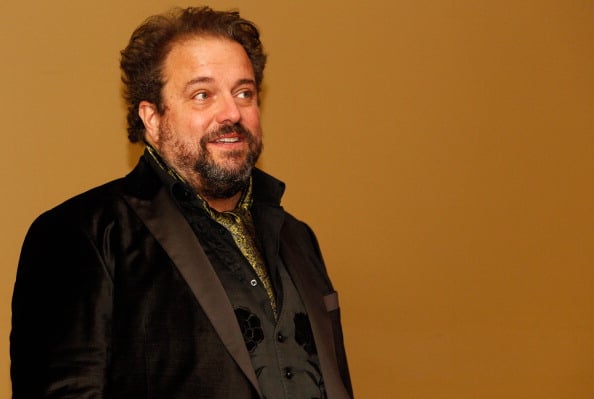
Terry Wyatt/Getty Images
Solo Career and Musical Expansion
The Mavericks' breakup in 1999 opened space for Malo's solo ambitions. His 2001 album "Today" revealed the full breadth of his musical vision: ornate arrangements, Latin flourishes, sweeping ballads, and a vocal presence that could shift from intimate to explosive within a single phrase. Songs like "Every Little Thing About You" found a home on Adult Album Alternative radio, while tracks sung in Spanish illuminated his connection to Cuban musical traditions.
Malo also earned a reputation as a superb guitarist, a skill he refined across solo tours and studio work. He continued to experiment stylistically, collaborating widely, producing for other artists, and becoming a beloved figure in Americana circles. Over the years he explored ranchera, bolero, rhythm and blues, Western pop, and orchestral arrangements, always grounded in his dynamic voice.
Mavericks Reunion and Later Work
A brief 2003 reunion produced a self-titled album, but the Mavericks fully re-formed in 2011 with a refreshed lineup that included guitarist Eddie Perez and keyboardist Jerry Dale McFadden. Signing with Big Machine Label Group, they released the exuberant "In Time" in 2013 and the retro-leaning "Mono" in 2015. These records yielded new fan favorites such as "Back in Your Arms Again," "As Long as There's Loving Tonight," "Pardon Me," and "Let It Rain (on Me)."
The group continued to evolve, issuing the independent album "Brand New Day" in 2017 and the fully Spanish-language "En Español" in 2020. Malo's voice deepened with age, becoming more resonant and emotionally textured. In 2023 he surprised audiences with "Say Less," a solo instrumental album that spotlighted his guitar work and compositional instincts. The Mavericks' final studio album, "Moon & Stars," arrived in 2024, drawn from unrecorded material Malo rediscovered in storage.
Illness and Final Performances
Malo announced a diagnosis of stage 4 colon cancer in 2024, later revealing he was also battling leptomeningeal disease, a rare and aggressive condition affecting the membranes surrounding the brain and spinal cord. Despite undergoing treatment, he continued performing for as long as his health allowed, documenting his journey with candor and urging fans to prioritize early screening.
His final performances were marked by emotional intensity, particularly a 2024 headlining show at Nashville's Ryman Auditorium, where he led the audience through cathartic sing-alongs and acknowledged the challenges of the year. In late 2025, the Mavericks' annual Ryman shows became tributes to Malo's career, featuring artists such as Rodney Crowell, Steve Earle, and Maggie Rose.
Legacy
Raul Malo died on December 8, 2025, at age 60. Tributes emphasized not only his extraordinary voice but his generosity, wit, curiosity, and unwavering belief that music could dissolve boundaries. His songwriting explored heartbreak and longing, yet his performances radiated joy. Bands rarely managed to be as musically elastic as the Mavericks, and singers with Malo's gifts were rarer still.
He leaves behind his wife, Betty Fernandez Malo, his three sons, Max, Vincent, and Dino, his mother, Norma, and his sister, Carol. His body of work remains a testament to the power of cultural fusion, fearless experimentation, and the human voice at its most expressive.
Read more: Raul Malo Net Worth
Comments
Post a Comment