What was Fanny Brice's net worth?
Fanny Brice was an American model, comedian, singer, and actress who had a net worth of $1 million at the time of her death. That's the same as around $12 million today after adjusting for inflation.
Rising from humble beginnings in New York's Lower East Side, she achieved national fame through her performances in Florenz Ziegfeld's "Ziegfeld Follies," where her sharp comic timing, expressive singing, and fearless self-parody set her apart from her contemporaries. Brice was equally adept at broad physical comedy and deeply emotional performances, most notably with her signature torch song "My Man," which became one of the defining musical moments of her career. Over time, she expanded her reach beyond the stage into film and radio, where she created the wildly popular character "Baby Snooks," a mischievous child whose antics captivated audiences for over a decade. Known for her distinctive voice, comedic intelligence, and ability to connect with audiences across mediums, Brice helped shape the evolution of American popular entertainment and remains a defining figure of Broadway, early Hollywood, and radio comedy.
Early Life
Fanny Brice was born Fannie Borach on October 29, 1891, on the Lower East Side of Manhattan, New York City. She was the daughter of a saloon keeper and grew up in a crowded, working-class immigrant neighborhood that would later influence her comedic sensibilities.
Brice left school at a young age to pursue a career in entertainment. At just 13 years old, she made her first stage appearance at Keeney's Theatre in Brooklyn, where she won an amateur night contest singing "When You Know You're Not Forgotten by the Girl You Can't Forget." The performance earned her a small cash prize and convinced her to pursue show business full time.
She spent her teenage years working in vaudeville and burlesque houses, taking on a variety of roles that helped her develop her comedic voice and stage presence. Early setbacks, including being dismissed from a chorus role because she could not dance, pushed her to lean more heavily into comedy and character-driven performances.
Breakthrough with the "Ziegfeld Follies"
Brice's career changed dramatically when she was discovered by famed impresario Florenz Ziegfeld, who brought her into the "Ziegfeld Follies" in 1910s. It was in these lavish Broadway revues that she became a star.
Unlike many of the glamorous performers featured in the "Follies," Brice leaned into humor, often parodying beauty standards and theatrical conventions. Her comic sketches included satirical takes on popular figures like Theda Bara and exaggerated spoofs of ballet and modern dance. Her ability to blend burlesque humor with sharp cultural commentary made her a standout performer.
At the same time, she proved her versatility as a singer. Her performance of "My Man," adapted from the French song "Mon Homme," became her signature piece. The emotional depth of the song, combined with her expressive delivery, resonated deeply with audiences and elevated her beyond a purely comedic performer.
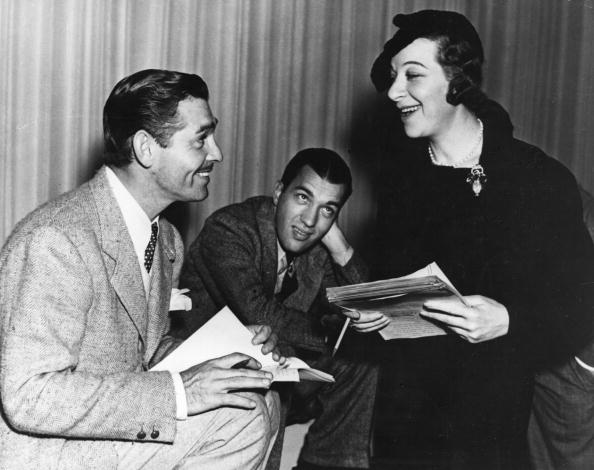
Brice remained a fixture of the "Ziegfeld Follies" for many years, appearing alongside major stars such as Eddie Cantor, Will Rogers, and W. C. Fields. Her salary and stature grew rapidly, making her one of the highest-paid and most sought-after performers of her era.
Getty Images
Film Career and Broadway Work
As the entertainment industry evolved, Brice transitioned into film. She appeared in both silent and early sound films, including "My Man," "The Great Ziegfeld," "Everybody Sing," and "Be Yourself." While her film career never quite matched the impact of her stage work, she remained a recognizable presence in Hollywood during the early years of talking pictures.
She also continued to perform on Broadway outside of the "Follies," appearing in productions such as "Music Box Review of 1924," "Sweet and Low," and Billy Rose's "Crazy Quilt." In 1925, she attempted to branch into straight dramatic acting with the play "Fanny," but the production was not successful, reinforcing her identity as a comedic performer rather than a dramatic actress.
Radio Success and "Baby Snooks"
In the later stages of her career, Brice found enormous success in radio with the character "Baby Snooks." Originally developed as a comedic bit performed at private gatherings and later incorporated into stage routines, the character was a mischievous, irreverent child whose innocent questions often led to absurd and hilarious situations.
"Baby Snooks" debuted on radio in 1938 and quickly became one of the most popular comedy segments on the air. Brice's vocal performance brought the character vividly to life, showcasing her ability to adapt her comedic talents to a new medium.
The program enjoyed a long run, first on CBS and later on NBC, and remained a staple of American radio entertainment for more than a decade. Even late in her life, Brice continued to perform as Snooks, demonstrating her enduring appeal and commitment to her craft.
Personal Life
Fanny Brice's personal life was often as dramatic as her stage performances. She was married three times, with each relationship attracting public attention.
Her first marriage, to barber Frank White in 1911, was extremely brief and ended almost immediately in divorce. In 1918, she married Jules W. Arnstein, a charismatic but troubled figure whose legal troubles would have a profound impact on her life. Arnstein was imprisoned for two years beginning in 1924 in connection with the disappearance of millions of dollars in securities. Brice stood by him during his imprisonment, but the marriage ultimately ended in divorce in 1927. The relationship later served as inspiration for the musical "Funny Girl," which dramatized her life story.
In 1929, she married showman Billy Rose. The marriage initially appeared stable but eventually deteriorated, leading to divorce in 1937. Brice had two children from her marriage to Arnstein, a son, William, and a daughter, Frances.
Throughout her life, Brice maintained close ties to her family and remained deeply devoted to her children despite the challenges of her personal relationships.
Death
Fanny Brice died on May 29, 1951, in Hollywood, California, at the age of 59. She suffered a massive cerebral hemorrhage several days earlier and never regained consciousness. At the time of her death, she was surrounded by family members, including her children.
Her passing marked the end of a remarkable career that had spanned vaudeville, Broadway, film, and radio.
Legacy
Fanny Brice's influence on American entertainment is profound. She helped redefine what it meant to be a female comedian at a time when glamour often overshadowed humor, proving that wit, individuality, and emotional authenticity could captivate audiences just as powerfully.
Her life and career later inspired the Broadway musical and film "Funny Girl," which introduced her story to new generations. Today, she is remembered as a pioneering performer whose work bridged multiple eras
Read more: Fanny Brice Net Worth
Comments
Post a Comment