In 1984, An Unemployed Ice Cream Truck Driver Memorized A Game Show's Secret Winning Formula. He Then Went On The Show…
Imagine you've called in sick from work and are watching a marathon of your favorite daytime game show. After the third straight hour of staring at the screen, something very strange suddenly clicks in your brain. Did you just notice a pattern in the game board's electronic formula? That can't be possible… can it?
You then proceed to spend the next three straight hours testing your hypothesis, only to conclude that YES, you have indeed somehow figured out the show's secret electronic winning formula.
Sounds too good to be true, right? Well, this is precisely what happened in 1984 to an ice cream truck driver from Ohio named Michael Larson. After watching endless hours of Press Your Luck, Michael figured out how to memorize the game board's electronic patterns and virtually guarantee a win. If an actual contestant figured out this secret, they could use the formula to win a small fortune from the show's parent company, CBS. And that is exactly what Michael Larson did.
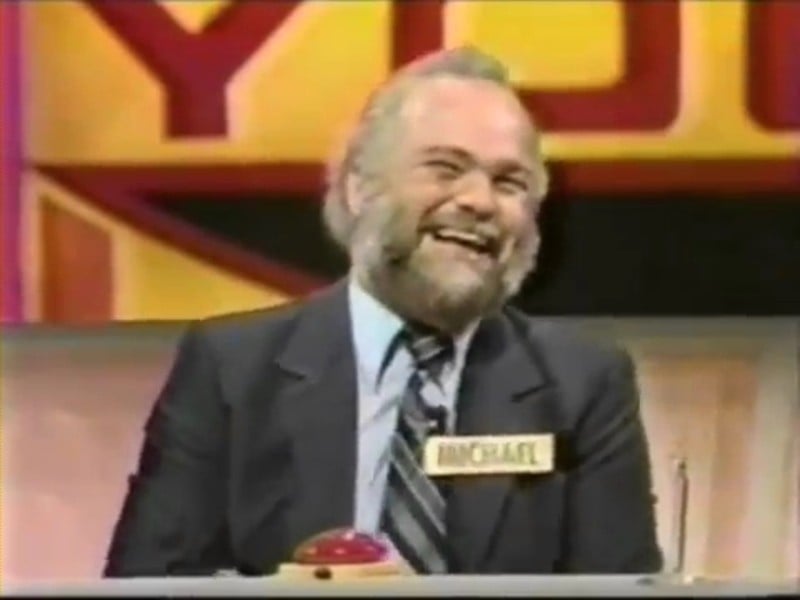
Michael Larson Press Your Luck
No Whammies!
For those of you who may not remember the game show "Press Your Luck", you probably recognize the signature catch phrase contestants would shout while playing their turn: "Come on, big money! No whammies! No whammy, no whammy… STOP!"
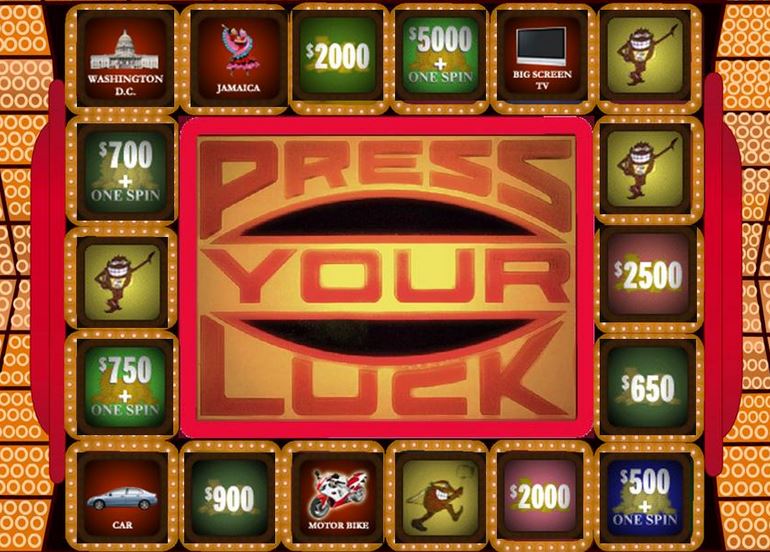
Contestants answered trivia questions to earn "spins" on an 18-square electronic game board that contained hidden prizes. The board was like a cross between Wheel of Fortune and a carnival Whack-a-Mole booth. During a spin, contestants had to press their buttons at just the right time to land on a square that contained a prize. If their timing was off, they landed on a little red cartoon monster called a "Whammy," which would wipe out all their winnings. As long as you didn't land on a whammy, you kept racking up cash and prizes. Whoever won the most stuff before the game was over got to take it all home.
This is what the game board looked like. Notice the whammies in the upper right corner?
Press Your Luck Game Board
Secret Formula
Michael Larson was hooked on Press Your Luck from the moment it premiered on CBS in September 1983. He quickly became morbidly obsessed with finding a way to beat the game.
Michael would record every episode with his VCR, then use the pause button to analyze the game board frame by frame, looking for a weakness to exploit. After weeks of painstaking analysis, Larson was actually able to find a pattern. Specifically, he realized that the #4 and #8 squares never contained a whammy and that their prizes continuously increased in value. Landing on either of those squares also rewarded the contestant with an extra spin.
His second big realization was that the board's bouncing prize selector did not follow a random algorithm; it actually alternated between five easy-to-memorize patterns.
Put simply, Michael knew exactly how to time the game board's shifting patterns so whenever he pushed the button, he would always land on either #4 or #8.
The Audition
After practicing his strategy for six months, in May 1984, Michael traveled by Greyhound bus from Ohio to Los Angeles to audition for the show. During a pre-audition interview, Michael spun a sympathetic tale. He explained that as an unemployed ice cream truck driver, he couldn't afford to buy a present for his daughter's upcoming sixth birthday. He hoped that by winning on Press Your Luck, he would be able to give his daughter the best birthday of her life.
Irresistible, right? After doing a practice round to show he understood the basic concepts of the game, producers informed Michael that he would officially be a contestant.
The Trivia Round and A Tactical Advantage
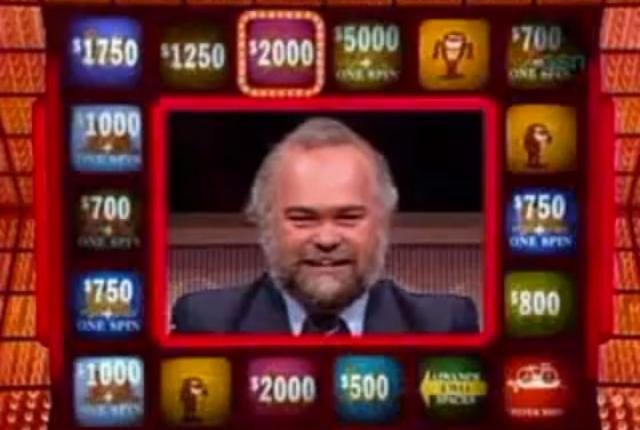
On Saturday, May 19, 1984, Michael took the center seat on the Press Your Luck stage between a Baptist minister named Ed and a dental assistant named Janie.
As always, the first round of the game consisted of simple trivia questions in order to win spins. Compared to his fellow contestants, Michael pretty much bombed the trivia round, fumbling several questions and ending up with only three spins. By comparison, fellow contestant Ed won 10.
However, as the player with the fewest spins, Michael got to face the game board first. This was actually a massive tactical advantage. Going first allowed him to take control of the board and rack up money before his competitors even had a chance to play.
On Michael's first spin, he landed on a whammy. To this day, no one knows for sure if this was an accident or a ploy to throw the producers off his true intention, but judging by his jovial reaction, it was likely intentional. He landed on winning squares with his next two spins before passing off to the others.
The second round began with some slightly easier trivia questions. Michael performed much better this time and earned seven total spins. Since he was still in last place, Michael got to spin first again.
The Streak and The Control Room Panic
Armed with seven spins, Michael made his move. By concentrating with deadly accuracy on the #4 and #8 squares, he went on an astonishing tear. His prize total quickly climbed from $2,500 to $10,000, then to $15,000, and up to $30,000.
Prior to Michael Larson, the average Press Your Luck grand prize winner walked away with around $10,000 total. Even $30,000 was an extraordinarily large prize for any game show at the time.
But Michael did not stop. After 13 spins, his total prize had risen to $32,351. After 21 straight winning spins, it rose to $47,601.
At this point, the show's control booth was filled with anxious CBS executives. Could this nightmare scenario really be happening? How stupid could they be to have two squares that never contained a whammy? Could they legally stop the game, or did they have to ride it out?
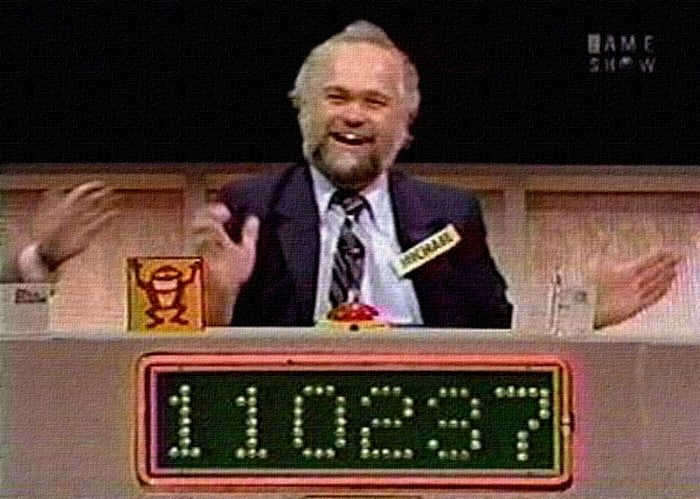
Meanwhile, with each new spin, the show's host, Peter Tomarken, was flabbergasted. Not realizing Michael was using a strategy, Tomarken begged him to stop pressing his luck, honestly worried that Michael would eventually hit a whammy and lose everything. Here is actual footage of Michael during the peak of his streak:
The Real Reason He Passed
Michael pressed on for 40 consecutive winning spins to rack up a mind-boggling $102,851. But crossing the $100,000 mark wasn't actually the reason he finally stopped.
The television studio lights were incredibly hot, and staring at the flashing board for 40 consecutive spins required an agonizing, grueling amount of concentration. Michael was visibly sweating profusely on camera. He finally passed his remaining spins because he was physically exhausted, losing his focus, and terrified that if he spun one more time, his fatigued reflexes would mistime the button press and hit a whammy.
He passed his four remaining spins to Ed. On Ed's first spin, he landed on a whammy and wiped out his bank. He came back to win $10,000 before whammying a final time to end his game. That left Janie, who landed on a whammy with her first spin, built her bank back up to $9,835, and passed her remaining three spins to a stunned Michael.
Michael clearly was not expecting to have to spin again. But he hunkered down, applied the strategy, and increased his winnings to $110,237 ($104,950 in cash and the rest in prizes, including a sailboat) before the game finally ended.
Winning $110,237 in 1984 is the equivalent of winning nearly $350,000 in today's dollars.
The Investigation
About halfway through his winning streak, CBS executives realized what was happening and promptly contacted their legal department. The head of CBS daytime programming, Michael Brockman, later told a reporter:
"Something was very wrong. Here was this guy from nowhere, and he was hitting the bonus box every time. It was bedlam, I can tell you. And we couldn't stop this guy."
Immediately after the taping, CBS lawyers reviewed the footage and noticed Michael's celebrations came a little too quickly—like he knew what was coming. Convinced he had cheated, CBS initially refused to pay him. Unfortunately for the network, when they consulted their own rule book, they couldn't find a single clause to disqualify him. He hadn't tampered with any equipment; he just paid attention.
CBS was forced to pay him his winnings. They banned him from ever appearing on another CBS game show and quickly reprogrammed the board to remove the flawless patterns. The infamous episode aired in two parts in June 1984 before embarrassed executives locked the tapes in a vault. It wasn't broadcast again for 19 years.
The Dollar Bill Contest and The Downfall
Michael got his money, but unfortunately, his luck peaked that day in May 1984. Roughly half the money went to taxes, some was kept in savings, and the rest was poured into a series of failed get-rich-quick schemes, including a real estate Ponzi scheme. Broke once again, Michael was forced to take a job as an assistant manager at Walmart.
Obsessed with finding another loophole to wealth, he found one in a local radio contest. A station announced they would pay $30,000 to anyone who could produce a $1 bill with a specific, announced serial number. True to his obsessive nature, Michael withdrew his remaining $50,000 in savings entirely in $1 bills. He brought the massive haul home in garbage bags and began frantically sorting through 50,000 individual bills, searching for the winning serial number.
While the money was sitting in his house in trash bags, he was robbed. His entire remaining fortune was stolen. Livid, he accused his girlfriend of taking the money. They screamed at each other until she finally walked out forever.
The FBI Manhunt
As a final, desperate attempt to make a fortune, Michael got swept up in an illegal pyramid scheme called Pleasure Time Incorporated, which defrauded 20,000 investors out of $3 million for shares in a fake Native American lottery company.
With a warrant out for his arrest and agents from the FBI, SEC, and IRS hot on his tail, Michael was forced to flee. He relocated to Florida and lived completely off the grid under the alias "Justin MacDonald." He managed to evade federal authorities until the very end, dying on the run from throat cancer in 1999.
It was a tragic, solitary end for a clever man who figured out how to beat the system, but never quite learned how to walk away.
Comments
Post a Comment