What Was Bill Rasmussen's Net Worth?
Bill Rasmussen was an American sports media entrepreneur and businessman who had an estimated net worth of $10 million at the time of his death. Bill Rasmussen was best known as the founder of ESPN, the 24-hour sports network that transformed television sports coverage and eventually became one of the most valuable properties in American media.
Rasmussen's personal fortune, however, was nowhere close to the enormous value ESPN eventually achieved. After losing his job with the New England Whalers in 1978, he and his son Scott Rasmussen developed the concept for an around-the-clock sports channel and initially funded their efforts with a $9,000 credit-card advance. Getty Oil subsequently supplied the capital necessary to launch the network in exchange for an 85% ownership stake. ESPN debuted on September 7, 1979, but Rasmussen lost operational control and left the company in 1980, long before ESPN became a hugely profitable media empire.
Rasmussen remained an entrepreneur for the rest of his life. His later ventures included Internet companies, sports-media startups, consulting, books and public speaking. He also served as chairman of Attitude Network, an Internet company that was acquired in a transaction valued at nearly $47 million in 1999, although Rasmussen's personal proceeds from the deal were never publicly disclosed.
Early Life
William F. Rasmussen was born on October 15, 1932, in Chicago, Illinois, and grew up on the city's South Side. He attended DePauw University in Indiana, where he studied economics and played baseball. After graduating in 1954, Rasmussen served in the United States Air Force before attending Rutgers University, earning an MBA in 1960.
Rasmussen initially worked for Westinghouse and also established an advertising-services business. His broadcasting career began in western Massachusetts in the early 1960s. He worked in radio at WTTT in Amherst before moving into television, eventually spending years at WWLP in Springfield as a sports director and later news director.
In 1974, Rasmussen joined the World Hockey Association's New England Whalers as communications director. When the Whalers fired much of their front office in 1978, Rasmussen suddenly found himself unemployed at age 45. That setback led directly to the idea that defined the rest of his life.
Founding ESPN
Rasmussen and his son Scott initially explored the idea of a cable channel devoted to sports in Connecticut. As they investigated satellite technology, they realized that a satellite signal could turn a regional service into a national network.
The financial risk was substantial. The Rasmussens used a $9,000 cash advance on a credit card during the company's earliest days and committed to a five-year satellite-transponder contract reportedly worth $2.6 million before they had anything close to enough revenue to support it.
They also needed somewhere to construct studios and install the enormous satellite dishes required for the operation. Rasmussen negotiated with officials in Bristol, Connecticut, and agreed to pay $18,000 for a parcel of land sight unseen. That inexpensive piece of property became the beginning of ESPN's enormous Bristol headquarters.
The breakthrough came when Getty Oil agreed to finance the fledgling network. Getty eventually committed more than $100 million to the venture, but the financing came at a steep price for Rasmussen: Getty took an 85% ownership interest.
ESPN also secured a broad programming agreement with the NCAA and landed Anheuser-Busch as a major advertiser. Rasmussen served as ESPN's first president before becoming chairman as experienced television executive Chet Simmons was brought in to run the company.
At 7 p.m. on September 7, 1979, ESPN went on the air. Its first program was "SportsCenter," followed later that evening by a professional slow-pitch softball game. The network initially reached roughly 1.4 million cable homes.
ESPN Ownership and Exit
Rasmussen created what would eventually become a media empire, but he did not retain the kind of founder ownership that would have made him enormously wealthy.
Getty Oil's 85% stake gave the oil company control of ESPN before the network even launched. Rasmussen's authority was progressively reduced, and he left the company at the end of 1980.
Accounts differ somewhat on the precise timing and structure of his financial exit. One detailed history of ESPN reported that the Rasmussen family received a $3.4 million settlement when Bill departed. Contemporary reports several years later still described Rasmussen and other original investors as collectively owning a minority interest in the company, indicating that his separation from ESPN was more complicated than a single clean stock sale.
What is clear is that Rasmussen did not retain a large stake as ESPN's value exploded. In 1984, after Texaco acquired Getty Oil, ABC agreed to pay $202 million for Texaco's controlling ESPN interest. ABC completed its acquisition that year and soon sold a 20% stake in ESPN to Nabisco for $60 million, implying a valuation of roughly $300 million.
Those transactions took place only a few years after ESPN's launch, but Rasmussen's economic participation was already limited. In the decades that followed, ESPN would become worth many billions of dollars without generating a comparable personal fortune for its founder.
Attitude Network and Other Ventures
Rasmussen continued launching and advising businesses after ESPN. He consulted for sports organizations and media companies, including the Big Ten and some of its member universities, and became involved with companies including SportsatHome and College Fanz Sports Network.
One of his most significant later business ventures was Attitude Network, where Rasmussen served as chairman. The company operated Internet gaming properties including Happy Puppy, Games Domain and Kids Domain during the dot-com boom.
In April 1999, theglobe.com acquired Attitude Network. Securities filings valued the total transaction at approximately $46.8 million, including about $43.1 million in newly issued theglobe.com shares along with stock options, warrants and transaction expenses. Rasmussen was one of the company's most prominent executives, but his percentage ownership and personal proceeds from the sale were not publicly disclosed.
The nature of the transaction was also important: most of the purchase consideration consisted of theglobe.com stock during the height of the Internet bubble rather than cash. Theglobe.com's shares subsequently suffered a spectacular collapse along with many other dot-com stocks.
Rasmussen later founded College Fanz Sports Network, an Internet venture focused on college sports, and remained active as a consultant, speaker and author. His books included "Sports Junkies Rejoice! The Birth of ESPN" and "ESPN: One Giant Leap for Fankind."
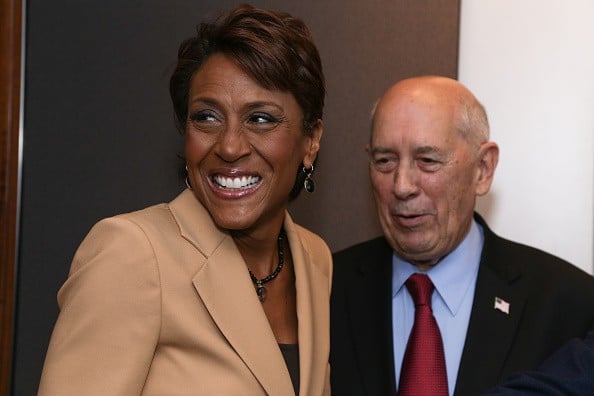
Anna Webber/ Getty Images
Stadium Naples
Not all of Rasmussen's post-ESPN ventures succeeded. During the 1990s, he became the founder and driving force behind Stadium Naples, a proposed golf resort and spectator complex in southwest Florida. The project was envisioned as a roughly $100 million development that would combine a golf course with stadium-style seating and other facilities.
Stadium Naples never became the major attraction Rasmussen envisioned and eventually became entangled in legal and political controversy. Rasmussen faced charges connected to the failed development. A racketeering charge against him in a public-corruption case was ultimately dropped. In a separate stock-fraud matter connected to Stadium Naples, he pleaded guilty in 2002 to two misdemeanor counts of making false statements and agreed to cooperate with investigators.
Real Estate and Residences
Rasmussen was not publicly associated with a large portfolio of trophy real estate. The most historically significant property transaction connected to him was actually ESPN's original Bristol land purchase. The $18,000 parcel Rasmussen negotiated for in the late 1970s became the foundation of a corporate campus that eventually expanded to well over 100 acres.
During ESPN's creation, Rasmussen lived in Connecticut. He later maintained ties to Florida and South Carolina, and by the late 2010s he was living in Seattle with his daughter Lynn and her family. He later returned to Florida. Unlike many founders of companies that eventually became worth billions of dollars, there is no widely documented collection of mansions, commercial properties or other major real-estate assets associated with Rasmussen personally.
Personal Life and Death
Rasmussen was married to his wife, Lois, for 56 years before her death in 2011. They had three children, sons Scott and Glenn and daughter Lynn.
In 2019, Rasmussen publicly revealed that he had been diagnosed with Parkinson's disease in 2014. He subsequently became an advocate for Parkinson's awareness while continuing to make public appearances and discuss ESPN's history.
After decades of relative distance from the network, Rasmussen reconnected with ESPN around its 20th anniversary in 1999 and increasingly received recognition for his role in the company's creation. He was inducted into the Sports Broadcasting Hall of Fame in 2025. In 2026, ESPN aired the documentary "Sports Heaven: The Birth of ESPN," which revisited the extraordinary circumstances surrounding the network's launch.
Bill Rasmussen died at his home in Florida on August 18, 2026, at the age of 93 from the effects of Parkinson's disease. He was survived by his three children, seven grandchildren and two great-grandchildren. His greatest financial opportunity may have slipped away when he lost control of ESPN, but his larger legacy was secure: an idea that once seemed absurd became a permanent part of American sports and television culture.
Read more: Bill Rasmussen Net Worth
Comments
Post a Comment