J. Paul Getty Was Once The Richest Man In The World. What Happened To His Fortune After His Death In 1976?
When J. Paul Getty died in 1976, he was one of the richest people on Earth. His fortune was worth at least $2 billion, the equivalent of roughly $12 billion today. He owned a sprawling international oil empire, valuable real estate, an extraordinary art collection and a 72-room English mansion.
Getty had spent most of his adult life accumulating that fortune, frequently making enormous bets that other investors thought were insane. He also spent an almost comical amount of energy trying not to part with his money. This was, after all, the billionaire who installed a pay phone in his mansion and initially refused to pay the ransom when his teenage grandson was kidnapped.
But no matter how obsessive Getty was about preserving his wealth, he couldn't take it with him.
So what happened after he died?
Who inherited the billions? What happened to Getty Oil? Did the family keep control of the company? How much of the original Getty fortune survived into later generations? And how did a portion of the money eventually become the financial engine behind one of the richest art institutions in the world?
The answers involve a family trust created decades before Getty's death, a bitter fight over control of his oil company, the largest corporate takeover in American history at the time, and a fortune that took a very different path from the one its founder probably imagined.
First, How Did J. Paul Getty Get So Rich?
Getty did not start from nothing. His father, George Getty, was a successful lawyer who entered the Oklahoma oil business in the early 1900s and became a millionaire. J. Paul began working in the family oil fields as a young man and quickly demonstrated an ability to identify valuable leases and make aggressive investments. By his mid-20s, he had made his first million dollars.
When George Getty died in 1930, J. Paul inherited about $500,000 directly. Much of the remaining family wealth was controlled by his mother, Sarah Getty. Through arrangements made around that time, a major portion of the family's holdings eventually became part of the Sarah C. Getty Trust, which would play an important role in preserving the family's wealth for later generations.
Getty spent the following decades acquiring oil producers, refiners and distributors, eventually controlling companies including Pacific Western Oil, Tidewater Oil, Skelly Oil and Mission Corporation. Rather than simply owning oil wells, Getty wanted to participate in virtually every step between extracting crude and selling finished petroleum products.
His greatest gamble came in 1949.
The Gamble That Made Getty One Of The Richest People Alive
In 1949, Getty obtained a 60-year oil concession covering the Saudi Arabian portion of the Neutral Zone between Saudi Arabia and Kuwait. He paid roughly $9.5 million upfront and then committed tens of millions more to exploration.
For four years, Getty drilled without finding the enormous petroleum reserve he was hoping for. Then, in 1953, the gamble paid off. Oil was discovered in substantial quantities, and the concession eventually began producing millions of barrels annually.
The discovery dramatically increased Getty's wealth and gave his companies access to enormous Middle Eastern petroleum reserves. In 1957, "Fortune" identified him as the richest American, and he was subsequently described as the richest private citizen in the world. His major petroleum interests were ultimately consolidated under the Getty Oil Company name in 1967.
By the time Getty died on June 6, 1976, at the age of 83, he had transformed a family oil business into one of the great industrial fortunes of the 20th century.
Then that fortune began going in two very different directions.
Getty Left A Fortune To His Museum
Getty had five sons and numerous grandchildren, but one of the biggest beneficiaries of his personal estate was the institution he had created to house his art collection.
Getty established the J. Paul Getty Museum Trust in 1953 and opened a museum at his Malibu ranch the following year. He later financed construction of the Getty Villa, modeled after an ancient Roman villa buried by the eruption of Mount Vesuvius.
When Getty died, the bulk of his personal estate went to the museum trust, including roughly $660 million worth of Getty Oil stock. The estate spent several years working its way through probate, during which time the assets appreciated significantly. By the time the Trust received the inheritance in 1982, Getty's bequest was worth roughly $1.2 billion.
Virtually overnight, a museum created by one eccentric oil billionaire had become one of the richest cultural institutions on Earth.
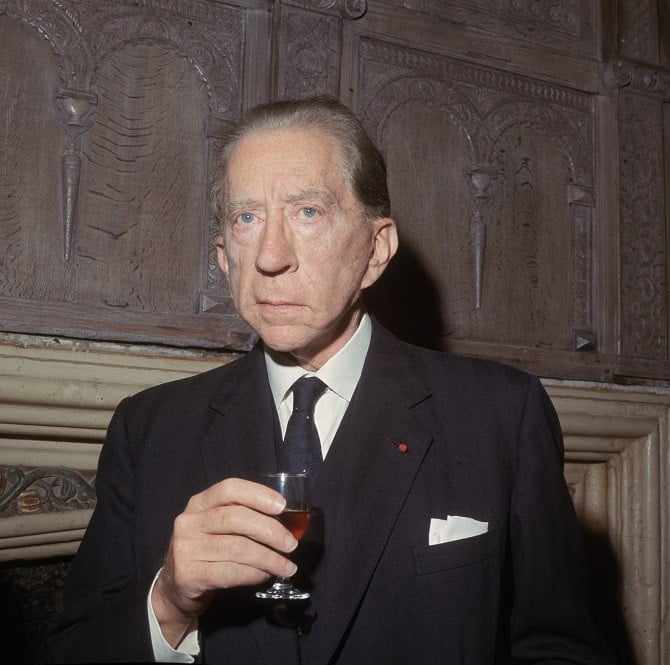
(Photo by Hulton Archive/Getty Images)
Getty's $1.2 Billion Bequest Becomes A Nearly $14 Billion Institution
Rather than simply spending Getty's inheritance, the Trust invested it like a giant university endowment. It also expanded dramatically, eventually encompassing the Getty Museum, Getty Research Institute, Getty Conservation Institute and Getty Foundation. Getty's fortune financed major art purchases, research, conservation projects and, most visibly, construction of the enormous Getty Center overlooking Los Angeles.
The investment portfolio continued compounding. For the fiscal year ending June 30, 2025, the J. Paul Getty Trust reported $13.9 billion in total assets, including $9.3 billion in investments and more than $3 billion in collections and other assets.
Think about that for a moment. J. Paul Getty died with a personal fortune of at least $2 billion. Nearly 50 years later, just the cultural institution that inherited a major portion of that fortune controls almost $14 billion in assets.
But the museum was only one part of the story.
The Getty Family Still Controlled Billions
The Sarah C. Getty Trust owned an enormous stake in Getty Oil and existed for the benefit of Getty family members. After J. Paul's death, his youngest son, Gordon Getty, became one of the central figures determining the company's future.
Gordon was an unusual heir to an oil empire. His passion was classical music, and he devoted much of his life to composing rather than petroleum. But by the early 1980s, he had become convinced that Getty Oil's stock price dramatically undervalued the company's enormous oil reserves.
That belief helped set off one of the wildest takeover battles in American corporate history.
Texaco Buys Getty Oil For $10.1 Billion
In late 1983 and early 1984, Getty Oil became the object of intense takeover interest. Pennzoil appeared to have reached an agreement to acquire the company. Then Texaco swooped in with a larger offer.
Texaco ultimately agreed to pay $125 per share, valuing Getty Oil at roughly $10.1 billion. At the time, it was the largest corporate takeover in American history. Adjusted for inflation, $10.1 billion in 1984 is more than $30 billion today.
The Sarah C. Getty Trust's holdings alone were worth roughly $4 billion in the transaction. After capital-gains taxes, the trust still held around $3 billion.
The sale ended the Getty family's direct control of the oil empire J. Paul had spent decades constructing, but it did not destroy the family's wealth. Billions of dollars that had previously existed as shares in Getty Oil could now be diversified into stocks, bonds, real estate, private businesses and other investments.
In effect, the Gettys stopped being primarily an oil dynasty and became an investment dynasty.
The Getty Trust Also Hit The Jackpot
There was another huge winner in the Texaco sale: the J. Paul Getty Trust.
Remember that much of Getty's $1.2 billion bequest consisted of Getty Oil shares. The takeover dramatically increased their value, and the Trust's wealth surged again only a few years after it had received Getty's estate.
Getty had therefore left his museum something considerably more valuable than a pile of cash. He had left it a major ownership position in a company that was about to become the target of the largest takeover in American history.
And Then Came A $10.5 Billion Lawsuit
The Getty Oil saga somehow became even more extraordinary after the sale.
Pennzoil argued that it had already reached a binding agreement to acquire Getty Oil before Texaco interfered. It sued Texaco and, in 1985, a Texas jury awarded Pennzoil an astonishing $10.53 billion in damages.
The judgment helped push Texaco into bankruptcy protection. The companies eventually settled for $3 billion.
So the battle over Getty Oil produced both a roughly $10 billion acquisition and a roughly $10 billion legal judgment. Even after J. Paul Getty was dead, his company was still generating financial drama on a historic scale.
What Happened To The Getty Heirs?
Over the following decades, the private Getty fortune spread across multiple branches and generations. There is no longer one pile of money that can accurately be described as "the Getty family fortune." Assets have moved through trusts, investment firms, foundations, estates, art collections and individual family members.
But the Gettys remained extraordinarily wealthy. Gordon Getty became a multibillionaire while pursuing his interests in classical music and philanthropy. His brother J. Paul Getty Jr. became one of Britain's most prominent philanthropists. Later generations entered finance, technology, filmmaking, fashion and entertainment.
Actor Balthazar Getty, J. Paul Getty's great-grandson, became known for roles in "Lord of the Flies," "Lost Highway" and "Brothers & Sisters."
And one Getty descendant created another company whose name became recognizable around the world.
Yes, Getty Images Is The Same Getty Family
In 1995, J. Paul Getty's grandson Mark Getty co-founded Getty Images with Jonathan Klein. The company grew into one of the world's dominant suppliers of editorial photography, stock images, video and other visual content.
So yes, when you see "Getty Images" underneath a photograph in a newspaper, magazine or website, that's the same Getty family.
Which creates a particularly amusing situation for us here at Celebrity Net Worth: We pay Getty Images licensing fees for photographs that appear in our articles.Including articles about the Getty family 🙂
So What Happened To J. Paul Getty's Fortune?
Nearly 50 years after his death, the answer is surprisingly simple: A huge amount of it is still here.
Getty Oil disappeared as an independent company when Texaco bought it for $10.1 billion. But the sale converted enormous Getty family shareholdings into billions of dollars that could be reinvested and passed through future generations. Meanwhile, the personal fortune Getty left to his museum grew into an institution controlling nearly $14 billion in assets.
There is no longer one Getty empire. Instead, the fortune fragmented into several different legacies: private family wealth, trusts and investments, Getty Images, philanthropy, and one of the richest art institutions in the world.
J. Paul Getty spent much of his life obsessing over how to make money, preserve money and avoid unnecessarily parting with money. Nearly half a century after his death, it's hard to argue with the results.
Comments
Post a Comment