The IRS Filed A $1.57 Million Lien Against Todd and Julie Chrisley. Here's A Complete History Of The Reality Couple's Astounding Financial Roller Coaster
More than a year after President Donald Trump pardoned Todd and Julie Chrisley, the couple has another substantial tax problem. According to federal tax records, on August 19, 2026, the IRS filed a $1.57 million lien against the former "Chrisley Knows Best" stars in Davidson County, Tennessee. The amount includes $142,410.72 in unpaid taxes for 2021 and $1,429,041.89 for 2022. Neither the pardon nor their release from prison makes those separate tax assessments disappear.
The lien is the latest entry in an unusually complicated financial history. Long before their television show introduced viewers to a family surrounded by expensive cars, designer clothes and enormous houses, Todd had filed for bankruptcy with nearly $50 million in debts.
The couple then earned millions from reality television, was convicted of obtaining more than $30 million in fraudulent bank loans, and received prison sentences accompanied by a restitution order exceeding $17 million. The pardons changed the status of that restitution, but they did not resolve every question about what the Chrisleys own, what they owe, or how much they are earning today.
The Real Estate Business and the $49 Million Bankruptcy
Todd Chrisley made his name in the Georgia real estate business, building companies that worked with distressed and foreclosed properties. His success supported the trappings of considerable wealth. He and Julie Chrisley lived in elaborate homes, and Todd would later brag on television that his family sometimes spent $300,000 or more on clothing in a year.
Behind that image, Todd's finances were already unraveling. In August 2012, he sought Chapter 7 bankruptcy protection and listed approximately $49.4 million in liabilities against $4.2 million in assets. The debts reportedly included about $12 million in mortgages, nearly $600,000 in overdue federal taxes and $4.4 million borrowed from Julie. According to his attorney at the time, Todd had personally guaranteed a real estate development loan that failed, leaving him exposed to roughly $30 million.
Some of the bankruptcy filing's smallest numbers were as memorable as the largest. Todd listed $100 in cash, $55 in a checking account and clothing worth just $650. The trustee questioned whether his filings adequately reflected his assets and examined transactions involving Julie. Todd denied concealing assets. Todd later agreed to a $150,000 settlement with the trustee, but in 2017 the trustee alleged that $70,000 remained unpaid. The nearly $50 million figure describes debts he reported in 2012; it is not a verified current balance.
We wrote about the contradiction between Todd's lavish lifestyle and his bankruptcy in an October 2014 article, just as the second season of "Chrisley Knows Best" was about to premiere. At that point, the family's wealth was still a major part of the show's appeal.
Millions from Television — and Fraudulent Bank Loans
"Chrisley Knows Best" debuted on USA Network in 2014 and ran for nine seasons, with its final episodes airing in 2023. Todd's elaborate parenting rules, confrontational humor and conspicuously expensive lifestyle made the family famous. The show also created a significant new income stream. Testimony at the couple's criminal trial established that approximately $6 million flowed to their production company, 7C's Productions, from television work between 2013 and 2016. That was company revenue, not necessarily money the couple kept after expenses or taxes.
Prosecutors said the apparent wealth had also been fueled by fraud. According to the Justice Department, Todd and Julie, working with a former business partner, submitted fabricated bank statements, inflated financial statements and false audit materials to obtain more than $30 million in loans from banks around Atlanta. The money went toward real estate, cars, clothing, travel and repaying older loans. Federal prosecutors said Todd later escaped more than $20 million in fraudulently obtained loans through bankruptcy.
The couple also failed to file federal income tax returns for several years while earning money from their show, according to evidence presented at trial. Prosecutors said they used accounts associated with their production business to conceal income from the IRS, including transferring control of an account to a relative after tax investigators sought information about Julie's accounts. Todd and Julie maintained that they had been wrongfully accused and blamed misconduct on a former employee, but a federal jury convicted them in June 2022.
Todd received a 12-year prison sentence, and Julie received seven years. They began serving their sentences at separate federal facilities in January 2023. The judgments also imposed enormous restitution obligations: $17,270,741.57 against Todd and $4,740,645.04 against Julie. Those figures are not two independent bills that can simply be added together, because responsibility for some of the underlying losses overlapped.
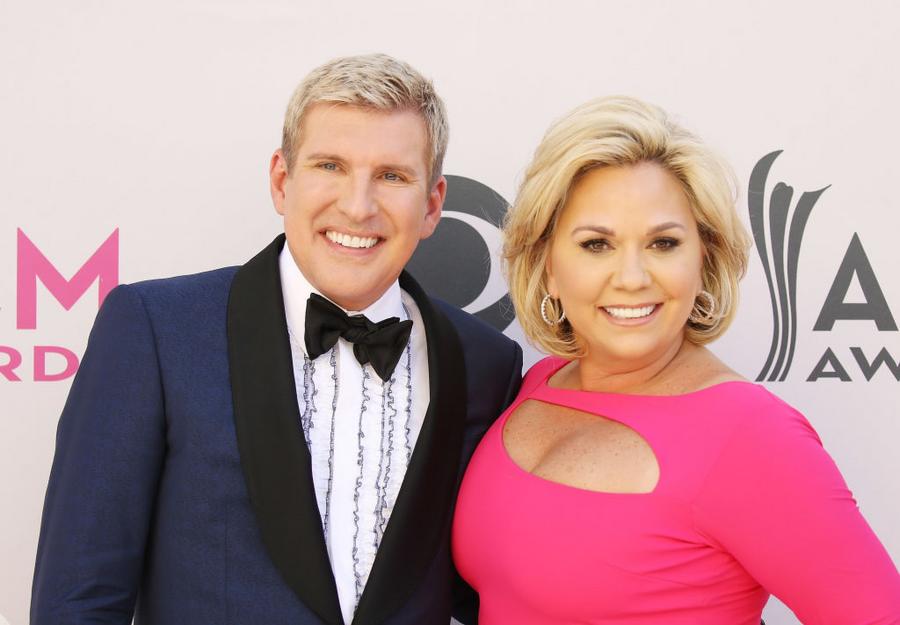
(Photo by Michael Tran/FilmMagic)
A $5.2 Million Mansion Sale — But How Much Cash Was Left?
The couple's property transactions tell another part of the story. In 2016, the family purchased a home in Nashville's Belle Meade area for $1.6 million. Three years later, Julie bought a substantially larger Brentwood, Tennessee, estate for $3.375 million. The Brentwood mansion, complete with an indoor sports court and other luxury amenities, became one of the most visible symbols of their success.
While Todd and Julie were in prison, that Brentwood property sold in an off-market transaction in April 2023 for $5.2 million. The selling price was $1.825 million above its 2019 purchase price. But the difference is not the same as cash profit: there may have been mortgage balances, renovation expenses, transaction costs and claims against the proceeds. Public reporting does not establish how much of the sale price ultimately remained with the couple.
There is also a significant ownership distinction involving the family's Nashville home. The Belle Meade property was transferred to their daughter Savannah Chrisley in 2020, according to property reporting. The Chrisleys' ability to live in a valuable family residence should not be mistaken for proof that Todd and Julie personally own it. Their earlier Georgia mansions likewise cannot simply be counted as present-day assets.
The $1 Million Settlement the Government Tried to Collect
One of the more revealing episodes occurred while the couple was incarcerated. In January 2024, the Chrisleys announced a $1 million settlement stemming from their lawsuit over the conduct of a Georgia tax investigator. It looked like a significant financial recovery at a time when their legal bills were mounting. Their attorney, however, said the money had not been paid directly to Todd or Julie and had instead gone toward other debts.
But federal prosecutors were still trying to collect restitution. A January 2024 court filing identified $981,313 in settlement proceeds as a target for garnishment and put the outstanding criminal restitution balance at approximately $17.2 million. Later filings showed that the couple's lawyers held $29,932.23 in a client trust account subject to the writ. In May 2024, a judge ordered those remaining trust-account funds turned over.
Those records do not fully account for every dollar of the settlement. They do show why a seven-figure legal victory cannot automatically be treated as a seven-figure increase in the Chrisleys' personal wealth.
What the Presidential Pardons Actually Changed
On May 27, 2025, Trump announced that he would pardon Todd and Julie. Their formal full and unconditional pardons were dated May 28, and both were released after serving about 28 months. The pardons ended their remaining prison sentences and federal supervision requirements. They also delivered an enormous financial benefit: the Chrisleys were relieved of their remaining $17 million criminal restitution obligation.
Todd had been ordered to pay $17,270,741.57 in restitution, while Julie's judgment specified $4,740,645.04 in restitution, involving overlapping responsibility for the bank losses. Under the Justice Department's longstanding interpretation of presidential pardon law, a full and unconditional pardon eliminates court-ordered criminal restitution that has not yet been received by the victims. **In other words, yes, the presidential pardons wiped out whatever remained unpaid on the $17.27 million restitution judgment.** The banks could no longer collect that outstanding balance through the criminal judgments. Any money already collected and distributed to victims was not returned.
However, the pardons did not erase every debt the Chrisleys owed. They did not automatically forgive separate private civil obligations, outstanding taxes, or unrelated court judgments.
That brings the story back to the new IRS lien. The $1.57 million filing reported in October 2026 covers assessments for tax years 2021 and 2022, rather than reviving the restitution ordered in the criminal case. The assessments were made in 2022 and 2023, and the lien was recorded in Tennessee in August 2026. It represents a separate financial problem, notwithstanding the pardons.
Todd also faces a civil judgment that the pardons do not affect. In April 2024, a federal jury awarded former Georgia tax investigator Amy Doherty-Heinze $755,000 in her defamation lawsuit against him, including compensatory damages, punitive damages, and litigation expenses. In November 2025, the court amended the judgment to specify that post-judgment interest had accrued since April 2024. Efforts to enforce the judgment in Tennessee followed. Publicly available reporting does not establish that Todd has fully satisfied it.
The Chrisleys Are Earning Money Again
The couple returned to a business that had once generated millions for them: entertainment. Their family appeared in Lifetime's 2025 docuseries "The Chrisleys: Back to Reality." That July, PodcastOne announced an exclusive multiyear agreement to relaunch their podcast as "Chrisley Confessions 2.0." Todd has also appeared with sons Chase and Grayson on another podcast, "Two Sons and Me." These are active commercial projects, although their actual compensation and take-home earnings have not been publicly disclosed.
In a September 2025 television interview, the couple discussed having spent roughly $3 million on legal fees. Asked whether they were still rich, Todd declined to provide a number. Their financial future could also be affected by a lawsuit they filed in June 2026 against their former criminal-defense lawyer and his firm, seeking more than $25 million in damages for alleged legal malpractice. The allegations are contested, and the amount demanded is not money they have won or collected.
So where does all of this leave Todd and Julie? The record shows a former real estate fortune burdened by bankruptcy, millions in television revenue, fraudulent borrowing, a substantial mansion sale, expensive legal proceedings, and a major criminal restitution obligation that was subsequently lifted by presidential clemency. It also shows at least $1.57 million in newly publicized federal tax liabilities and Todd's separate $755,000 civil judgment, before any applicable additional interest or other obligations.
What it does not show is a complete current inventory of their cash, investments, business interests or outstanding private debts. The Chrisleys once made their wealth the centerpiece of a television franchise. Their latest tax lien is a reminder that the question of how much money they actually have remains considerably harder to answer than the lifestyle they displayed on screen.
Comments
Post a Comment